
Brought to you courtesy of Catholic Ireland
29th Sun Ordinary time -Year A
– 18 -10- 2026 –
29th Sunday in Ordinary time –Year A
Mission Sunday
The Gospel text : Matthew 22: 15-21
vs.15 The Pharisees went away to work out between them how to trap Jesus in what he said.
vs.16 And they sent their disciples to him, together with the Herodians, to say
“Master, we know that you are an honest man and teach the way of God in an honest way, and that you are not afraid of anyone, because a man’s rank means nothing to you.

vs.18 But Jesus was aware of their malice and replied, “You hypocrites! Why do you set this trap for me?
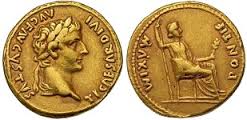
vs.19 Let me see the money you pay the tax with.” They handed him a denarius,
vs.20 and He said, “Whose head is this? Whose name?”
vs.21 “Caesar’s” they replied.
He then said to them, “Very well, give back to Caesar what belongs to Caesar – and to God what belongs to God.”
vs.22 This reply took them by surprise, and they left him alone and went away.
*******************************************************************
We have four commentators available from whom you may wish to choose . Scroll down to the required author.
Michel DeVerteuil : A Holy Ghost Priest, Specialist in Lectio Divina
Thomas O’Loughlin:Professor of Hist Theology, Uni of Nottingham.
John Littleton: Director of the Priory Institute, Tallaght, Dub 24
Donal Neary SJ: Editor of The Sacred Heart Messenger
****************************************
Michel DeVerteuil
Lectio Divina with the Sunday Gospels- Year A
www.columba.ie
General Comments
In order to bring the saying alive in this way, we need to read it in the context of a story, which is how it is presented to us, not as an abstract timeless truth but as a response to a situation. The question for us then is, when did we experience a similar situation? And then, who was the Jesus who spoke as he did?
We must be careful to interpret the saying correctly. In the course of the Church’s history, it has often been taken to mean that there are areas of life which are Caesar’s domain and other areas which are God’s.
In fact the saying has been used to justify the claim that religious leaders should not “interfere” in secular fields like politics, economics or culture.
This could not possibly be the meaning, however. The entire teaching of Jesus, indeed the entire bible, insists that the whole of creation “belongs to God” – “his is the earth and the fullness there of”. There is no question of “separate domains” therefore, since everything belongs to God.
The 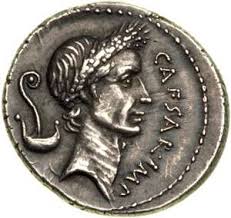
“What belongs to God” must be taken in a wide sense to mean what is so precious that we cannot make concessions where it is concerned – family, friendship, the sanctity of sex, self respect, compassion, humility, care for the poor, sick and elderly etc.
Jesus then is challenging the Pharisees to get their priorities right.
* His position can be expressed positively: treasure what is primary for you, and you will find that you will have no problem looking after (“paying your taxes” to) what is secondary.
* It can also be expressed negatively: don’t take secondary things so seriously (“pay taxes to them”) that you end up compromising what is primary.
We enter into the drama of “whose head is this?” Feel Jesus’ inner freedom (a hint of disdain) when he says, “well then, give it back to him”. On the other hand feel the terrible sadness of a priority gone wrong
– allowing something that is sacred (“belongs to God”), to have “Caesar’s head” engraved on it.
The passage is intended to evoke memories of people or communities getting priorities wrong:
* parents who provide material benefits for their children but neglect to give them quality time.

*Church leaders who are more concerned with what people think than with being faithful to the message of Jesus.
*public officials who work for popularity and compromise their integrity.
Jesus is the person (or community) pointing out that priorities have gone wrong. As with all insightful statements, his answer is simple but surprising (“it took them by surprise”) and deeply satisfying (“they left him alone and went away”).
A sign that we have made a good meditation is that we identify with the Pharisees. If we find ourselves looking down on them, it means that we haven’t really entered into the story. They represent us (sometimes an inner voice within us) when we voice concerns which are important but which are really “a trap” in which more important values are lost. This situation occurs in:
~our personal lives, e.g. concerns with health, job security, standing in the community;
~ the life of the Church, e.g. concerns for large numbers, prestige, structures;
~ the development of a social movement, e.g. concern with taking political power, finances.
The details of how the Pharisees “went about” asking their question are all significant and can help us recognise them from our experience.
~ They “set traps”: their concern hampers true growth.
~ They “work it out”: their arguments are very subtle; note in particular the unctuous language; we are never more “pious” than when we are rationalizing our fears and prejudices.
~ They do it “between them”: what they say represents the thinking of many, an entire class or even a culture.
The Pharisees’ flattery in verse 16 is part of their “trap”, but we can take their words at face value. They were right to say that Jesus was “an honest man” who “taught the way of God in an honest way,” that he was “not afraid of any one” and that people’s rank “meant nothing to him”. We celebrate people (or communities) like that; we read these words as a call to repentance.
Prayer Reflection
Lord, there was a time when we had become overly concerned for what was relatively unimportant:
~ what people thought about us,
~being financially secure,
~not making mistakes,
~ being hurt.
We recognise now that this concern was undermining our priorities,
like the Pharisees working out between them how to trap Jesus in what he said.
We thank you that you sent us Jesus,
– close friends,
– members of our community,
– our children,
– national leaders.
They made us aware of the malice in this concern,
told us that we were quite right to give to Caesar what belonged to him
but that we had allowed ourselves to give to Caesar what belonged to God alone.
We thank you, Lord, for the insight, so simple and yet so surprising.
What had seemed an insoluble problem was now solved,
we left it alone and went our way. Thank you, Lord.
“We ought not to consider our chance of living or dying, we ought only to consider whether we are 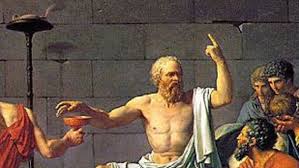
Lord, from time to time you come into our lives
calling us to re-establish right priorities:
– through a bible passage or a homily;
– through some friend or a member of our family pointing out our faults;
– when one of our dream projects collapses in failure.
Forgive us that we refuse to hear what you are saying.
We know that if we did we would have to change our ways.
So like the Pharisees working out how to trap Jesus in what he said,
we think up all kinds of arguments:
– following this way will harm our health or hurt those dear to us;
– it is against common sense and no one else is doing it;
– it will offend powerful people and cause confusion in the community.
At such times we become very pious,
we say how much we long to be true and how open we are,
but really we are marshalling a thousand reasons for staying as we are. Lord, have mercy on us, Pharisees.
Lord, our culture lays too much stress on things that are important but secondary, like wealth, prestige and popularity.
We are like the Pharisees in the time of Jesus worrying about whether or not they should pay taxes to Caesar,
and so we end up setting traps for the idealists you have sent us
and are totally surprised at their answers.

with the wisdom that comes from being honest, from not being afraid of anyone because people’s rank means nothing to us,
and from giving you what belongs to you.
Once rooted in his wisdom we can escape from the traps that are set for us by the false values of our time;
we will recognise the things that have Caesar’s image on them
and have no problem giving them back to him.
On the other hand we will recognise the things that bear your image alone.
*********************************************************
Thomas O’Loughlin
Liturgical Resources for the Year of Matthew
www.columba.ie
Introduction to the Celebration
Homily Notes
1. The phrase ‘rendering to Caesar the things of Caesar, and to God the things of God’ is one of the bits of scripture that people often use without recognising its origin. But it is a phrase that we can do well to keep with us.
2. We all know we have a variety of duties and responsibilities:
To those around us who love us and whom we love: care, respect, and tenderness are not optional in our relationships.
• We have responsibilities to those we work with and to those who employ us – honesty and integrity are supposed to be hallmarks of Christians;’
• We have responsibilities to the larger society ; we are called to be responsible citizens.
• We have responsibilities toward the whole of humanity in that we must work for peace, development and the security of our common future on this planet- this is something we are conscious of today but which it would hardly been having been worth mentioning a century ago. Yes we have we have an ever growing responsibility toward the environment and the care of the planet, indeed because we believe we are all creatures and that God has made us stewards of creation we have an interest in this that is far more demanding than that of an environmentalist who would not recognise the divine origin of the creation – again this is not something that would have been given prominence even a few decades ago and some who call themselves Christians still think environmental concerns are not really ‘religious’ issues despite saying each week’ we believe in one God, maker of all that is, seen and unseen’.
• And we are called in the Spirit to follow the Christ, to become part of his body the church, and offer praise and thanks to our heavenly Father – prayer and praise and an awareness of the mystery that surrounds us is part of our humanity.
3. If we had a little score card of all those duties with this question before each of them: ‘Do you think this is part of the duties of a member of the People of God?’, then virtually every one of us would tick the ‘yes’ box for each question.
4. However, just as at the time of Jesus, we try to play one off against the other.
6. In the face of this we must remember that God is’ ‘The God of all creation In his love God has given the creation a freedom and integrity, and given humanity responsibilities within it. We are called to live lives of prudence, always keeping in mind the variety of our duties to self, others, the world, and God. It is in taking care of this variety of responsibilities that we fulfil the command to render Caesar’s things to Ceasar, and God’s things to God.
****************************************************************
John Litteton
Journeying through the Year of Matthew
www.Columba.ie
Gospel Reflection
[caption id="attachment_52126" align="alignright" width="300"]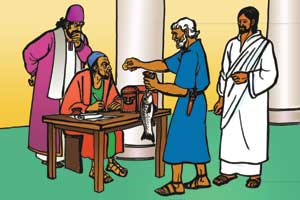
There are several lessons that we can learn from this episode about paying just taxes. The first, perhaps the most obvious, is that it is not only legitimate for a Christian to obey the just laws of the state and to pay taxes but we have a duty to do so. We have this example from Jesus
For meditation
You hypocrites! Why do you set out to trap me? (Mt 22:18)
*******************************************
Donal Neary SJ
Gospel Reflections For Sundays Year A
www.messenger.ie
A place for everything!
My mother used always say – put things where they belong. Newspapers, food, the bicycle not in the hall, and other such homely advice. Jesus says the same here – give what belongs to where it belongs and to whom.
So Jesus is being asked about taxes and politics. He knows he is being trapped about money. He moves on to higher questions. Something about the answer of Jesus asks us — where do we belong?
Belonging can sound heavy – as if we are being controlled, or our money belongs to us and we can do what we like with it. But for Jesus it’s the belonging of love, not of power and control.
Much is not in our control. We are born and die at God’s time. This reminds us that we are not the masters of our lives, we come from God and go to God. This belonging is the centre of our human family and community. God doesn’t want to control us but to love us.

But there’s an addition: belonging to God means belonging to each other. We have rights and duties of love.
To give to others what belongs to others; give to the poor what belongs to the poor. Everyone has a right to the food of the earth and the food of the mind, and shelter for the body.
It’s not charity when people are given food, education, a home, freedom of religion, freedom of speech – it is justice. To give to God what belongs to God is to share the goods of the earth!
Think of a time when you made a decision for the common good –
money given away, cleaning the neighbourhood,
joining a parents’ group etc. Remember and be grateful
Lord, may your will that we share well the goods of the world be done.
********************************************